
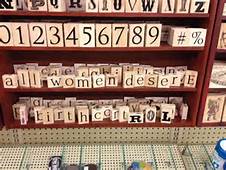
I don’t care what Jane thinks!

Who is Jane Nitze, and should I care what she thinks? The answer to this question is: “I don’t care and neither should you.”

Jane Emma Kucera Nitze is the face of a $2 million advertising campaign supporting the judicial nomination of Judge Neil Gorsuch. This campaign is funded by the Judicial Crisis Network. In the $2 million ads, she says: “I’m 100 percent comfortable with Judge Gorsuch becoming the next Supreme Court Justice.” And I say, “so what?”

Nitze comes from white privilege. She has bachelor’s, master’s, and law degrees from Harvard University. She is the daughter of Dr. Emma Koukol Kucera (an endodontist) and Dr. Jan F. Kucera of Boston (a neurology professor at Boston University). She clerked for both Judge Gorsuch and Justice Sonia Sotomayor (who conducted her marriage ceremony), worked as an attorney advisor in the office of legal counsel at the Justice Department in Washington, and now is a Climenko Fellow and Lecturer on Law at Harvard Law School.

Jane’s husband has an even more impressive pedigree, which I won’t go into; but suffice it to say that he has clearly led a life of white male privilege.

Now I am happy that Mr. & Mrs. Nitze have a very nice, privileged life. But I object to Jane telling me she is okay with Judge Gorsuch and implying that I should be, too. The only thing I have to say to that is: “HOBBY LOBBY!” In the infamous Hobby Lobby decision, Gorsuch argued that the requirement that employers cover birth control for their employees would force business owners “to underwrite payments for drugs or devices that can have the effect of destroying a fertilized human egg,” despite arguments from the law’s supporters that an exemption would allow owners to impose their faith on employees. BTW I am still boycotting Hobby Lobby (and I’m a knitter!). The picture above was taken at a Hobby Lobby after a protester rearranged the letter blocks.

In Little Sisters of the Poor, Judge Gorsuch suggested that the opt-out allowed in the federal health care law “imposes a substantial burden on that person’s free exercise of religion.”

Reproductive healthcare for everyone, free birth control for women paid for by their employers, preservation of the Affordable Care Act – these are the things I care about – not whether Jane likes Judge Gorsuch.

The Judicial Crisis Network has invested over $1 million in the Republican Attorneys General Association, over $4 million in state judicial races (aren’t you glad Nebraska doesn’t elect judges), funded the ad campaign touting Jeff Sessions as a “civil rights champion”, and now is funding the $2 million campaign for Jane to tell us  that Judge Gorsuch is a good guy.

Judge Gorsuch writes scary opinions (even if he is an Episcopalian), and we should be concerned about him becoming the next Justice on the United States Supreme Court. Don’t listen to Jane.

Tomorrow is Day 31 at the Nebraska Legislature. There are still no permanent rules. However, they have extended the temporary rules through Day 50. Stay tuned for more action/inaction.


February 19, 2017 – 75th Anniversary of Executive Order 9066

February 19, 2017, is the 75th anniversary of Executive Order 9066, which ordered the internment of over 120,000 Japanese Americans during World War II. It is also the day when Allegiance will be shown nationwide for the second time. Allegiance is the musical production which appeared on Broadway for a short time, was filmed and was shown in theatres around the country on December 13, 2016. Allegiance stars George Takei and Lea Salonga and depicts one Japanese American family’s journey from February 19, 1942, to  the present. See the trailer here.

This movie is important because many people still bear the scars of the internment. I saw the movie in December, and it was a very difficult experience for me. It was hard to see dignified Issei (1st generation Japanese Americans) and their families be herded onto trains, race tracks, and barracks while they tried to show their loyalty to their new country by obeying this incredibly racist and unjustified policy. Second generation Japanese Americans (Nisei) were less accepting, probably as a result of being more Americanized. They were also almost all U.S. citizens, born and raised in this country.

The Commission on Wartime Relocation and Internment of Civilians found: “In sum, Executive Order 9066 was not justified by military necessity, and the decisions that followed from it – exclusion, detention, the ending of detention and the ending of exclusion—were not founded upon military considerations. The broad historical causes that shaped these decisions were race prejudice, war hysteria and a failure of political leadership. Widespread ignorance about Americans of Japanese descent contributed to a policy conceived in hate and executed in an atmosphere of fear and anger at Japan. A grave personal injustice was done to the American citizens and resident aliens of Japanese ancestry who, without individual review or any probative evidence against them, were excluded, removed and detained by the United States during World War II.”

The movie has received some criticism for some historical inaccuracies which you can read about here. But I believe it captures the fear, anger, and despair of the people who knew they were loyal Americans but were imprisoned for their ancestry alone.

This movie comes out at a pivotal time in our country. Unless you are Native American (Indian), you come from a family of immigrants. They may have come to this country on the Mayflower, or they may have come last week. They came for various reasons – seeking religious freedom, involuntarily as slaves, involuntarily as prisoners, seeking a better life, fleeing war, starvation, and genocide, or innumerable other reasons. But for those of us who are descended from immigrants, we have no right to deny to today’s immigrants and refugees the hope and promise that was given to our families.

There are Day of Remembrance and Never Again activities planned all around the country to honor the memory of those interned by Executive Order 9066.

Allegiance is showing in Lincoln at the Marcus Grand and in Omaha at the Village Point Cinema and Twin Creek Cinema.  All showings are at 12:55 pm on Sunday, February 19, 2017. I could not find any other Nebraska showings, but you can check here. I encourage you to see the movie if you can.

Update on the Nebraska Legislature – Tuesday, February 14, 2017, is Day 29 of the session – still no permanent rules.


Do I have white privilege?

This blog post is not meant to be a definitive look at white privilege or to make judgments about people or to make them feel bad. It is simply to raise some awareness about how easy it is to make someone feel excluded, different, or unwelcome. A person cannot change their race, but they can understand what role their race plays in how they are treated by others. And during these trying times, I think it is especially important to try and be kind and thoughtful.

A quick quiz – answer yes or no, has anyone ever said the following things to you or have you had the following experience?

  1. Your English is very good.
  2. Where are you from? And when you answer North Platte, have someone ask further, no, where are you really from?
  3. Are you a Buddhist?
  4. Do you know [insert random Asian person]?
  5. What are you?
  6. When you travel and/or when you heard about the ICE raids and ICE checkpoints being set up, did you start putting together the additional forms of ID you intend to carry in case there are problems? Along with this, have you ever felt you were singled out for additional security checks because of your appearance?

If you can answer no to all of these questions, you probably have received the benefits of white privilege. I, on the other hand, can answer yes to every one of these questions. In addition, I have been asked these questions many times and generally by virtual strangers or people I was meeting for the first time. Hint – It is good to have some appropriate small talk in your repertoire – in Nebraska you can always talk about the Huskers or the weather and be in pretty good shape.

The “real” answers to these questions:

  1. English is my first and really only language. My college French is pitiful, but was useful in France to buy train tickets and order food.
  2. This is a particularly offensive question because it implies I don’t belong here or just got off the boat. Or perhaps they think I came from another planet (something that might be true).
  3. Sorry, no, a third generation Episcopalian (a cradle Episcopalian to boot). Also, how often is one of your first questions to ask someone what their religion is.
  4. Probably the most common question asked. Now if they ask me if I know someone from my home town (North Platte isn’t tiny, but I probably know them), that’s okay. That’s a Nebraska thing – we’re always trying to find people we know in common from people’s home towns. But if they think I know every Asian person in the world, or even in Lincoln,  it’s pretty offensive.
  5. That’s kind of an unanswerable question. I’m a lot of things, but probably nothing the questioner is interested in.
  6. Yes and yes. I always carry at least two forms of photo ID and my Nebraska State Bar Association card. I’m not sure what I think my bar card will do for me, and I’ve never used it; but I’ve always thought I could use it to make them think twice about messing with me. That may be delusional behavior, but you never know. Until I started getting TSA pre-check, it was very unusual for me not to get additional (so called random) checks at airport security lines (Lincoln being the exception).

An interesting fact is that Donald Trump’s mother, Mary Anne Macleod Trump  was born in Scotland. She immigrated  to the United States in 1930. She became a U.S. Citizen in 1942. Barack Obama’s father was not a U.S. citizen, and his citizenship was questioned by Trump. Both presidents had one parent who was a natural born citizen and one who was not. Apparently that is the only thing they have in common.

I just need to note that both my parents were natural born U.S. citizens, just saying. My grandparents immigrated to this country during the period of 1910-1920. They were prohibited from becoming U.S. citizens until the passage of the McCarran–Walter Act of 1952.

Some other perspectives on white privilege come from Christine Emba , who writes and talks about white privilege, the history of the term and what it means. Poet Gabriel Ramirez talks about what white privilege means to him.

In closing on this topic, please think before you speak. Even if you think you have good intentions in asking these types of questions (not sure what that would be except for personal gratification, i.e. being curious about a person and wanting the answer even if it is really none of your business), please remember that these questions are not a pleasant experience for the recipient. It is different if you are good friends and want to know more about a person and intend to tell them more about yourself. It is intrusive if you are a casual acquaintance or meeting someone for the first time. Boundaries, people, boundaries.

Update on the Nebraska Legislature – Monday, February 13, 2017, is Day 28 of the session – still no permanent rules. Stay tuned for more action/inaction.

Housekeeping note – if you want to sign up to receive an email when I post a new blog post, hit contact in the top right corner. A small box with “follow” will appear in the bottom right corner, hit follow, and it will prompt you to enter your email address. If you choose to do so, thanks for the follow.

Why I Will Not Be Voting for Deb Fischer in 2018

When 2018 comes, I will not be voting for Deb Fischer for U.S. Senate. To be honest, I did not vote for Fischer in 2012 – not in the primary and not in the general election. However, this time I will be donating money to Fischer’s opponent, telling everyone I know not to vote for Fischer, and voting for Fischer’s opponent.

Here are some reasons why:

  1. Fischer voted to confirm Jeff Sessions as U.S. Attorney General. Sessions was touted as a civil rights champion by ads aired by the Judicial Crisis Network. In reality, at Sessions’ failed judicial confirmation hearing in 1986, testimony was presented that “Sessions had criticized civil rights groups as ‘un-American’ and ‘Communist-inspired’ and accused them of trying to ‘force civil rights down the throats of people.’ He also dubbed a white civil rights attorney a ‘disgrace to his race,’ according to a witness, and reportedly called a black lawyer in his office ‘boy.’ In his confirmation hearing, he admitted to referring to the Voting Rights Act as ‘a piece of intrusive legislation,’ and he later opposed efforts to update the landmark law. I fail to see how Sessions can effectively protect our civil rights and voting rights, duties of the U.S Attorney General.
  2. Fischer voted to censure Senator Elizabeth Warren for attempting to read a letter from Coretta Scott King, criticizing Jeff Sessions during his failed 1986 judicial confirmation hearing. Fischer’s vote blocked Senator Warren from further debate on the Sessions’ confirmation.  During later debate, four white male Senators were allowed to read that same letter. Majority Leader Mitch McConnell invoked Senate Rule XIX, which states that: “No Senator in debate shall, directly or indirectly, by any form of words impute to another Senator or to other Senators any conduct or motive unworthy or unbecoming a Senator.” This rule was passed in 1902 after a disagreement in the Senate resulted in a fistfight. It was passed to prevent Senators from calling each others names on the Senate floor and stifling debate – the rule was not passed to cover a situation where the Senate is working in their “advice and consent” role and debating the character of a Senator seeking confirmation as U.S. Attorney General. This was a purely political vote to silence a woman Senator quoting a female African-American civil rights leader during Black History Month.
  3. Fischer voted to confirm Betsy DeVos as Secretary of Education. DeVos is a proponent of school vouchers and charter schools. Her work with the underperforming charter schools of Detroit is informing. Nebraska is a public education state, with a provision in our state constitution stating: “The Legislature shall provide for the free instruction in the common schools of this state of all persons between the ages of five and twenty-one years.” Article VII, Section 1. Fischer stated: “I have received assurances from [DeVos] in writing that the Department of Education will not impose new federal mandates related to vouchers on our schools.”  I am doubtful, but we shall see.
  4. Fischer and her family lease federal grazing land at a greatly discounted rate – Democrats say they have paid about a quarter of a million dollars in grazing fees for a benefit of $2.9 million. I do not have an objection to Fischer receiving this benefit. I do object to her receiving this financial benefit and turning around to deny welfare benefits to other individuals and to oppose all aspects of the Affordable Care Act (I wonder if she realizes that she and her staff are required to buy their health insurance through the ACA exchanges, although they did get a special exemption to get more favorable rates.).
  5. Fischer voted to confirm Rex Tillerson as Secretary of State. Tillerson was the former CEO of Exon Oil, a company known to fund climate change denial. Tillerson also has personal and professional conflicts of interest.

Please note – I am a third generation Nebraskan who grew up and lived in the 3rd Congressional District and now lives in the 1st Congressional District. I wouldn’t want my opinions discounted as those of an outsider, an accusation made by Ben Sasse about phone calls he received.

The picture at the top of this page is a screen shot from Fischer’s Wikipedia page earlier today. It has since been changed.

And on Day 25 in the Nebraska Unicameral – still no permanent rules. Some people think they are making progress. I think we are in for many, many more days of no movement and new poems from Senator Ernie Chambers.


Separation of Powers

One thing is clear to me. Our schools have failed to teach constitutional law and the separation of powers to whole generations of Americans.

Schoolhouse Rock explained our government and the separation of powers very well in their Three Ring Government video.

There are three branches of government – Executive, Legislative, and Judicial. The President is in charge of the Executive Branch. He or she runs the day to day business of the government through federal agencies such as the Department of Education (note – teach more about government), the Environmental Protection Agency, the Department of Health and Human Services, and many more agencies.

The Legislative Branch is Congress. They pass the laws that govern this country. Congress gives “advice and consent” to the President in the appointment of Supreme Court Judges (all federal judges), the Attorney General, agency heads, and ambassadors. Congress also gives “advice and consent” to the President to sign treaties with other nations. Article II, Section 2, U.S. Constitution.

The Judicial Branch is our court system. At the federal level there are District Courts (trial courts) in each state, 13 Circuit Courts of Appeal, and the U.S. Supreme Court. The Supreme Court picks and chooses which cases it hears; the Circuit Courts of Appeal are often the final decision makers.

These three branches of government act as a system of checks and balances with each other. We are seeing this played out every day. Congress is deciding whether or not to approve the President’s agency appointments. The federal courts are telling the President he has overreached his authority with his Executive Order on immigration and refugees. State of Washington and State of Minnesota v. Trump. Our current government is a civics lesson on display for all to see each and every day. We rarely have the opportunity to see our system work so clearly or to hear constitutional experts tell us on national television how our system of government works.

As a lawyer, I have always felt that the courts and the law are the greatest protection we have as citizens.  My favorite scene from Robert Bolt’s play, A Man for All Seasons, sums this up very well.

“William Roper: So, now you give the Devil the benefit of law!

Sir Thomas More: Yes! What would you do? Cut a great road through the law to get after the Devil?

William Roper: Yes, I’d cut down every law in England to do that!

Thomas More: …And when the last law was down, and the Devil turned around on you–where would you hide, Roper, the laws all being flat? This country’s planted thick with laws from coast to coast–man’s laws, not God’s–and if you cut them down…d’you really think you could stand upright in the winds that would blow then? Yes, I’d give the Devil benefit of law, for my own safety’s sake.”

As a self-professed law geek I am fascinated (and alternately appalled) to see this all play out. I will continue to monitor it all with great interest.

For those of you in Nebraska, an even more fascinating scenario is playing out in our Unicameral. Tune in to NET on demand and watch them in action, or perhaps inaction. Tomorrow is Day 24 of the session, and they have not adopted their permanent rules for this session. Senator Ernie Chambers (with a few other Senators) is holding the legislature hostage, promising to keep the Legislature tied up through the 90th day unless they stop trying to change the number of votes needed for a cloture motion (Cloture motions are filed when a supporter of a bill wants to end a filibuster). Senator Chambers is a master of the Legislature’s rules, and he tells the new Senators they have no idea what he can do. So he tells them what he plans to do, and so far they can’t figure out how to stop him. Stay tuned for a wild session.

Note: this explanation is a very simplistic explanation of our system of government and not meant to be a thorough examination of all the many intricacies of our Constitution.


Knitters are the Resistance!

Knitters, crocheters, and all crafters are the Resistance! I should know; I am one. I started knitting as a child, learning from my mother and watching my grandmother knit, even when her hands were crippled by arthritis. Both were strong women, determined that their daughters would get an education and make their way in the world. My grandmother sent all four of her children (3 girls & 1 boy) to college during the Depression. All 7 of her grandchildren graduated from college. All four of my grandparents were immigrants; all four of them enriched this country and made it a better place.

Prior to the election, I was following the following categories of people and entities on Twitter: knitters, yarny things, Husker Softball, Husker Women’s Basketball, Husker Baseball, Husker fans, Planned Parenthood of the Heartland, Planned Parenthood Voters of Nebraska, Planned Parenthood Voters of Iowa, ACLU of Nebraska, and that’s about it. Little did I know that the resistance would begin with tweets from knitters. People who had only been tweeting about yarn and their latest project were now promoting resistance and knitting pink pussy hats, lots of pussy hats. The goal of the Pussy Hat Project – 1.17 million hats.  Yes, 1.17 million hats, based on the estimate of the number of people who could fill the Mall in Washington, D.C. Kat Coyle posted the Pussy Hat pattern on Ravelry for free. Casey F, the co-founder and code monkey at Ravelry created the photo above, a composite of hundreds of knitters and their hats.

womensmarch

As we all know, they were largely successful – a grass roots effort to knit a million Pussy Hats. At the Women’s March, they were everywhere.

Image found on Twitter: @rmayersinger


pussyhat  This is the hat I wore at the Women’s March on Omaha.
Many people have made fun of the pink hats; some even questioned whether they had been made in China. The truth is they were made all over the world. People learned to knit to make them. People made them who were going to the march, people made them and sent them to a march with friends; people mailed them to the march. People are still making them. This video tells you everything you need to know about the project.

The hats are on the cover of Time Magazine and The New Yorker this week.

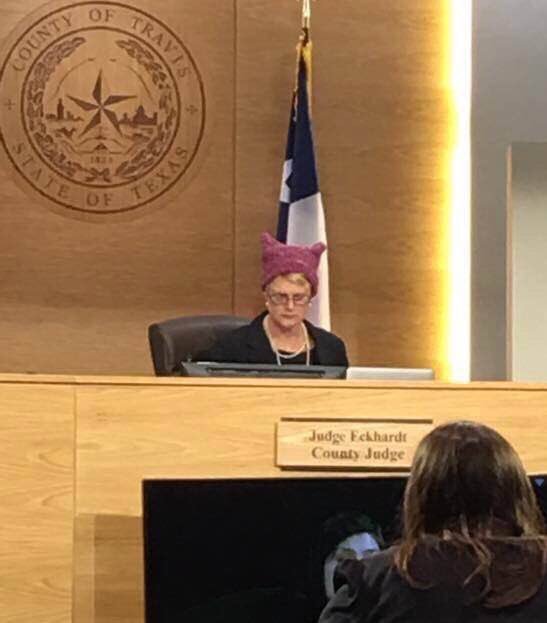
Randy Prine@randyprine Jan 29 put this on Twitter.

Judge Eckhardt of Texas wears her pussy hat in protest of Abortion and healthcare bill.

And knitters continue to lead the resistance.

peacederesistance

Ivy Bristol @BristolIvy has made over $10,000 selling her mitten pattern Peace de Resistance for $6.(If you’re doing the math, this means she has sold over 1600 copies of the pattern.) She is donating the money to Black Lives Matter, Standing Rock Legal Defense Funds, Days for Girls, Environmental Defense Fund, Trans Youth Equality Foundation, Engender Health, Flint Kids, and more.
Nikol Lohr @ThriftyKnitter has posted on Twitter that she has a WIP (Work in Progress in KnitSpeak) for Pro Choice/Planned Parenthood mittens. The pattern will be released soon; all proceeds to benefit Planned Parenthood.
Donna Druchunas has a free ebook of patterns – Knitting as a Political Act .
knit-the-resistanceKnit the Resistance is a free pattern from JanuaryOneKnits @January_one.
Knitters are more powerful than you think (and they’re organized!). Remember that!

We are all Fred Korematsu!

Today, January 30, is Fred Korematsu Day in California, Hawaii, Virginia and Florida.

Who is Fred Korematsu, you ask? He was a 23 year old Japanese-American man who defied Executive Order 9066 in 1942. On December 18, 1944, the US Supreme Court upheld the conviction of Mr. Korematsu, a US citizen who refused to submit to the exclusion order. Mr. Korematsu’s conviction for evading internment was overturned on November 10, 1983, after Mr. Korematsu challenged the earlier decision by filing for a writ of coram nobis. In a ruling by Judge Marilyn Hall Patel, the United States District Court for the Northern District of California granted the writ (that is, it voided Mr. Korematsu’s original conviction) because in Mr. Korematsu’s original case, the government had knowingly submitted false information to the Supreme Court that had a material effect on the Supreme Court’s decision. Mr. Korematsu was awarded the Presidential Medal of Freedom in 1998.

It is highly unlikely that his conviction would have been overturned without the relentless work of dedicated civil rights attorneys, and the sons and daughters (nisei) and grandsons and granddaughters (sansei) of Japanese-American internees who would not give up on this case.

Google is honoring him today. He would have been 98 years old today.

The Commission on Wartime Relocation and Internment of Civilians was established by an act of Congress in 1980 to investigate the Japanese-American internment. Their recommendations were published by the Commission in June 1983 in a report called “Personal Justice Denied”. The report found:

“In sum, Executive Order 9066 was not justified by military necessity, and the decisions that followed from it – exclusion, detention, the ending of detention and the ending of exclusion—were not founded upon military considerations. The broad historical causes that shaped these decisions were race prejudice, war hysteria and a failure of political leadership. Widespread ignorance about Americans of Japanese descent contributed to a policy conceived in hate and executed in an atmosphere of fear and anger at Japan. A grave personal injustice was done to the American citizens and resident aliens of Japanese ancestry who, without individual review or any probative evidence against them, were excluded, removed and detained by the United States during World War II.”

“It is estimated that, as a result of the exclusion and detention, in 1945 dollars the internees lost between $108 and $164 million in income and between $41 and $206 million in property for which no compensation was made after the war under the terms of the Japanese-American evacuation claims act. Adjusting these figures to account for inflation alone, the total losses of income and property fall between $810 million and $2 billion in 1983 dollars. It has not been possible to calculate the effects upon human capital of lost education, job training and the like.”

“Less tangibly, the ethnic Japanese suffered the injury of unjustified stigma that marked the excluded. There were physical illnesses and injuries directly related to the detention, but the deprivation of liberty is no less injurious because it wounds the spirit rather than the body. Evacuation and relocation brought psychological pain, and the weakening of a traditionally strong family structure under pressure of separation and camp conditions. No price can be placed on these deprivations.”

“[O]ur nation’s ability to honor democratic values even in times of stress depends largely upon our collective memory of lapses from our constitutional commitment to liberty and due process. Nations that forget or ignore injustices are more likely to repeat them.”

“The governmental decisions of 1942 were not the work of a few men driven by animus, but decisions supported or accepted by public servants from nearly every part of the political spectrum. Nor did sustained or vocal opposition come from the American public. The wartime events produced an unjust result that visited great suffering upon an entire group of citizens, and upon resident aliens whom the constitution also protects.”

“The belief that we Americans are exceptional often threatens our freedom by allowing us to look complacently at evil-doing elsewhere and to insist that ‘it can’t happen here.’ recalling the events of exclusion and detention, ensuring that later generations of Americans know this history, is critical immunization against infection by the virus of prejudice and the emotion of wartime struggle. ‘It did happen here’ is a message that must be transmitted, not as an exercise in self-laceration but as an admonition for the future. Among our strengths as a nation is our willingness to acknowledge imperfection as well as to struggle for a more just society.”

If this sounds familiar to you, it is because it is. Current events relating to the exclusion of refugees and holders of green cards, visas, and passports based solely upon their country of origin or their religion is an eerie echo of 1942. This time we must all speak up!

Someone who has spoken up today is Former Acting Attorney General Sally Quillian Yates.  Yates ordered the Justice Department not to defend Trump’s Executive Order “Protecting the Nation from Foreign Terrorist Entry into the United States”, saying “At present, I am not convinced that the defense of the executive order is consistent with these responsibilities [of the Department of Justice], nor am I convinced that the executive order is lawful”. She was almost immediately fired by President Trump. Her resistance put a smile on my face today and made an otherwise trying day a little brighter.

So at least today, we are all Fred Korematsu!*

*If you think that sounds familiar, it is because you remember the movie Spartacus.


And so it begins

I’ve been considering doing a blog for some time. The events of the last week have given me the impetus to finally commit to a blog. Please excuse the site errors as I’m finding it challenging to make the site look pretty.

In this rapidly changing political environment I’ve decided I can only focus my blogging efforts on a few of the many troubling issues facing all of us. I will be focusing on women’s reproductive health, ending rape culture, and the rights of immigrants, refugees, and non-citizens. It does not mean that I do not care about other issues; it just means that I need to narrow my efforts at this time in order to be able to function in my real life.

What is currently making me happy? I think it’s good to look at this every day. I went to the Women’s March on Omaha, and I was energized and encouraged by the number of men, women, and children at the march. I was especially happy to see so many young men and women at the march. It reaffirms my belief that most of us are good people and really do care about what is happening in our world.

In a trip to the grocery store earlier today I saw very diverse people chatting, buying groceries, and generally going about their lives peacefully. There was sushi available  to purchase (thank you Russ’s Market), as well as other types of ethnic foods. No one was calling their fellow shoppers vile names or asking for their citizenship or identification papers. We were all just living our lives, respecting each other, and minding our own business.

So what concerns me? Frankly, almost everything else. I feel as “crazy as a tick”; thank you C.J. Box (In Plain Sight) for that term. If I were younger, I might be joining The Betsy Riot. After all, I belonged to a subversive organization in college (fellow members, you know who you are). For now, I plan to blog, protest, write letters to my elected representatives (whether they want to hear from me or not, and I think they do not want to hear from me because I am not happy with most of them), call my elected representatives, write letters to the editor of our local paper, and donate money to Planned Parenthood of the Heartland, ACLU of Nebraska, and Voices of Hope.

I live a privileged life. I have health insurance; I have a job; I have a very good education; I have friends; I have family who are all safe and also live privileged lives; I am a natural born U.S. citizen (which means I could be President); and I live in a safe neighborhood in a safe community.

However, I do not take any of these things for granted. My grandparents, parents, aunts, uncles, and their families were the victims, and I do mean victims, of Executive Order 9066. Yes, the same type of Executive Order being signed at an unprecedented rate by our current President. Although my grandparents and parents were not interned, a polite euphemism for imprisoned, they were the subjects of this order. My aunts and uncles and their families were interned. If you cannot leave and there are guards with guns preventing you from leaving, you are imprisoned.

I have never said this out loud, much less written this, before today – I went to law school because I wanted to make sure this could never happen to my family and loved ones again. And as we are seeing, it is the lawyers who will protect all of us during this troubled time.

And most importantly, I am angry. I am angry that we have learned nothing from our past mistakes as a country. I am angry 24/7.

Future generations will look back at this point in time and ask, why didn’t people do anything? Why didn’t they do more? And how will you answer that question?

So I ask you all, what will you do today?